French desk
Blood CanticleThe French desk is the ornate Louis XV furnishing in Blackwood Farm’s parlor that William Blackwood’s ghost repeatedly points toward. Its empty drawer makes it less a container of evidence than the focus of an unresolved haunting: the household keeps returning to it because the apparition insists on its importance, though each search has yielded nothing.
Appearance and Place
Big Ramona describes the desk as standing between the parlor’s windows. The narration specifies its Louis XV style, single central drawer, cabriole legs, and elaborate ormolu. Its conspicuous ornamentation gives a precise physical presence to the object around which the household’s uncertainty gathers.
The Haunting and the Searches
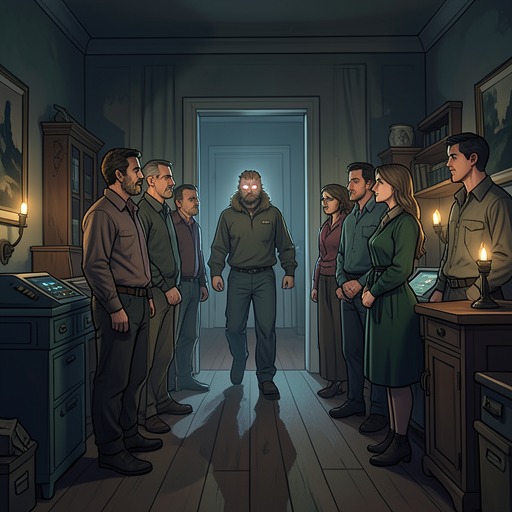
For years, William’s ghost has appeared in the room and pointed at the desk. Quinn, Jasmine, and Big Ramona have all witnessed the apparition. Big Ramona says that she answered it by reciting a Hail Mary, after which it vanished as abruptly as a candle flame being pinched out.
The family repeatedly opened the desk but found nothing. Even so, they carefully returned its key to a cup in the kitchen and kept locking it. Big Ramona recognizes the oddity of preserving the locked state of an apparently empty desk, without claiming to know why the family did so.
After Quinn took Mona away and his mother went missing, leaving her medicine behind, William’s ghost began appearing again day and night. Big Ramona and Jasmine saw him pointing at the desk, and Clem also saw the apparition. The renewed haunting disrupts their ordinary routines: Jasmine cannot do her work, and Big Ramona says she cannot either. They decide to search the desk once more, this time without waiting for Quinn’s permission.
The Desk and the Household’s Uncertainty
The episode sets the desk’s material solidity against the absence of anything its drawer might disclose. The key, the repeated searches, and the ghost’s persistent gesture turn an ordinary piece of furniture into an unresolved demand for interpretation: the household knows where to look, but not what the pointing means. Its importance lies in this mismatch between insistence and emptiness, which keeps the parlor—and the family’s account of what has happened there—in suspense.